|
|
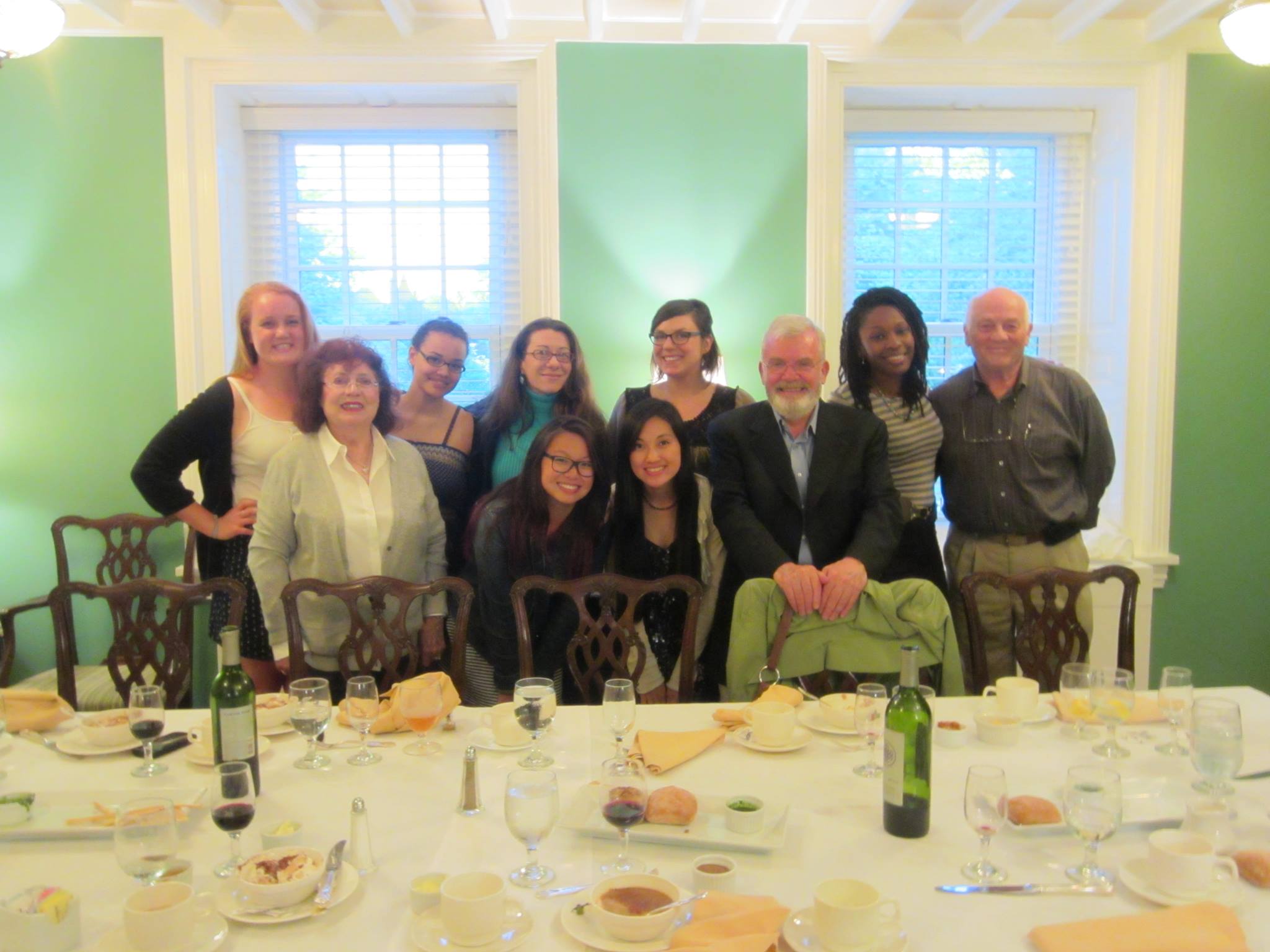
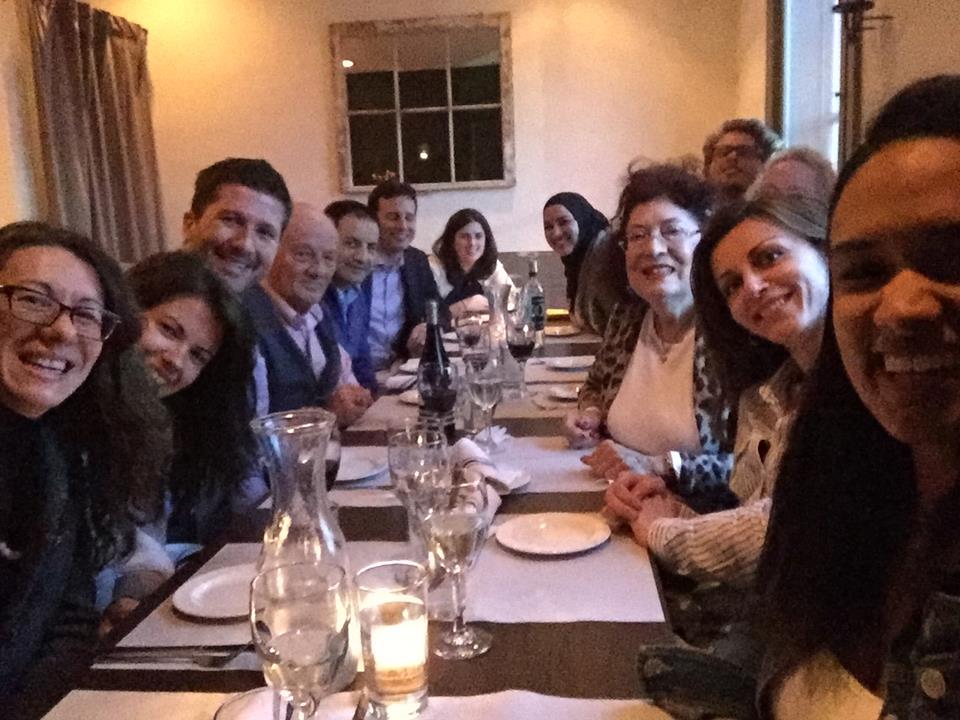
The Italian Department at Bryn Mawr celebrated the graduation of Allegra Fletcher, an Italian major, and Minerva Pinto, an Italian minor and History major, last April 27th.
Allegra had just successfully discussed her Senior Thesis entitled Le complessità fra l’identità e la storia immaginata nella scrittura di Igiaba Scego.
 
The TheTheThe
The Department also celebrated Andrea Guzzetti, who recently received a Ph.D. in Classical and Near Eastern Archaeology at Bryn Mawr College.

Congratulazioni!
Two new courses will be offered in Fall 2012 by the Departmen of Italian:
ITAL 201, Italian Culture and Society, two half-semester courses dedicated to music and to icons of Italian culture (food, design, fashion, etc.) For more information, contact Dr. Giuliana Perco (gperco AT brynmawr.edu)
ITAL 380, Modernity and Psychoanalysis, an in-depth interdisciplinary exploration of Italy’s intellectual life during the 20th century. For more information, contact Prof. Roberta Ricci (rricci AT brynmawr.edu)


This Summer, Cynthia Columbus, a Bryn Mawr sophomore pursuing a minor in Italia n and a major in Linguistics, will attend an intensive course of Italian language and culture at the Università per Stranieri in Siena, Italy, thanks to a scholarship that she was awarded for her multimedia project on food, culture, and Italian identity.
Brava, Cindy: way to go!
Cindy first elaborated her multimedia presentation as the final project for her Intensive Intermediate Italian course last Fall, and then expanded, perfected and submitted it to the annual competition organized by the Centre for Italian Studies at UPenn and the Consulate General of Italy in Philadelphia and open to college students enrolled in Italian courses.
Two scholarships were awarded this year, one to the Università per Stranieri in Perugia, and one to the Università per Stranieri in Siena, and many submissions were received by the judging committee, from colleges as far away as Virginia and Maryland.
Jadil Rodriguez, a Bryn Mawr sophomore majoring in pre-med and Italian, also placed among the best participants of the contest this year with her own project, involving a series of interviews to Italian native speakers.
Last year, another Bryn Mawr student, Gillian Diffenderfer, a major in Romance Languages with a focus on Italian and Spanish, won the Summer scholarshipin Perugia (at the time it was the only scholarship awarded) for her very elaborate multimedia presentation on Italian national identity.
Bryn Mawr students have been participating to this contest only for the past two years, but both times, for two years in a row, they won!
Davvero bravissime, ragazze!!

- A smiling Cindy (left) with Rita Pasqui, Cultural Officer of the Consulate General of Italy in Philadelphia at the Award Ceremony at UPenn last February 20th, 2012
Ciao a tutti!
If you’re looking for a quick and easy way to keep up with Italian activities at Bryn Mawr or you just want to say hi to fellow italianiste, be sure to check out and like our facebook page. You’ll find us under “Club d’Italiano”.
Link: http://www.facebook.com/groups/177196259021764/
The new social website that is being used by the College is now running and the Italian Club is part of it. Be sure to go and look us up. There will be activities up on the calendar shortly.
In order to join us on Planga:
1. www.planga.com
2. insert the name of the college – Bryn Mawr College.
3. sign in – either create an account or you can sign in through facebook.
4. insert “Italian Club” on the search box at the top of the page.
5. ask to become a member.
6. keep in touch – if you have any event suggestions be sure to contact Vicky Lopez at vlopez@brynmawr.edu
Our very own professor of Italian, Roberta Ricci, has been recommended by the Renaissance Quarterly for her new book: “Scrittura, riscrittura, autosegesi. Voci autoriali intorno all’epica in volgare.”
“I recommend this erudite book warmly not only to Boccaccio and Tasso specialists but also to scholars interested in the gamut of medieval and early modern autoexegesis,” says Madison Sowell in his review of a monograph by the Bryn Mawr Associate Professor and Chair of Italian Roberta Ricci in the latest issue of the Renaissance Quarterly,Vol. 64, No. 4 (Winter 2011), pp. 1256-1258.
Sowell, a distinguished scholar who now serves as the provost of Southern Virginia University, praises Ricci’s Scrittura, riscrittura, autoesegesi: Voci autoriali intorno all’epica in volgare: Boccaccio, Tasso as “an intriguing study of authorial commentary … [that] exemplifies the value of utilizing a blend of primary and secondary sources to accomplish serious research.”
link to BMC Insider: http://inside.blogs.brynmawr.edu/2012/01/12/roberta-ricci-book-review/
Other Reviews:
Reviewed work(s): Roberta Ricci. Scrittura, riscrittura, autoesegesi: Voci autoriali intorno all’epica in volgare: Boccaccio, Tasso. Letteratura Italiana 18. Pisa: Edizioni ETS, 2010. 258 pp. index. append. illus. bibl. €25. ISBN: 978–884672575–2.
Madison U. Sowell
Southern Virginia University
This intriguing study of authorial commentary surrounding Boccaccio’s Teseida and Tasso’s Gerusalemme liberata exemplifies the value of utilizing a blend of primary and secondary sources to accomplish serious research. Roberta Ricci divides her learned book into a lengthy introduction (focusing on methodology and hermeneutics), two chapters (one on Boccaccio’s medieval poem and the other on Tasso’s Counter-Reformation epic), two appendices, tavole (color illustrations of consulted manuscripts), and an Index Nominum. Succinct but impressive bibliographies accompany the main sections.
From cultural and historical perspectives, the decision to pair Boccaccio and Tasso seems daring. Indeed, at first blush it would appear that a dual focus on such divergent authors constitutes an intellectual and bibliographical minefield through which less-confident scholars would fear to tread. Not only did the two poets live in different eras and write in different milieux, but their temperaments and personalities scarcely align. Boccaccio is remembered for his multiple alter egos, and Tasso is often adjudged (rightly or wrongly) a paranoid schizophrenic. In addition, their autoexegetical approaches to the texts in question follow different morphologies, described aptly by Ricci as “due diversificate tipologie di autocommento al testo epico” (“two differing genres of self-commentary on the epic text,” 16).
The diverse typologies comprise, on the one hand, the marginal glosses found in the earliest Teseida manuscripts (composed 1339–40) and, on the other hand, the epistolary corpus Tasso produced (1575–76) as the Gerusalemme liberata was being written and rewritten. Marginalia are, by nature, textually internal and public to the reader; letters, by contrast, are external to the text and private for the addressee.
Nevertheless, while living in court settings (Boccaccio in Naples and Tasso in Ferrara), the two poets elected to write vernacular epics in octaves, and the resulting poems dealing with love and death in martial venues represent the rise and the decline of the Italian epic tradition. While Ricci omits to analyze the vernacular epic as a genre, she does, while discussing two exemplars, adduce many insights into the possible intentio auctoris, intentio operis, and intentio lectoris of an epic poem. Furthermore, employing Gérard Genette’s terminology and distinctions, Ricci makes a convincing case that Boccaccio’s “paratextual” glosses, which publicly foster “un dialogo diretto ed esplicito fra autore e ‘lettore modello’” (“a direct and explicit dialogue between the author and his ‘model reader,’” 19), and Tasso’s “epitextual” letters, which privately question his own poetical practices, are worthy of comparison.
Chapter 1 argues that Boccaccio’s glosses to his epic are intended to ennoble the romance narrative and justify the eclectic author’s experimental inclination; they serve to “nobilitare la nuova narrazione romanza e dunque autogiustificare la tendenza implacabile allo sperimentalismo in un autore eclettico” (“give nobility to the new romance genre and so to justify the remorseless tendency to experiment in an eclectic author,” 38). The Certaldese poet aims to mirror in his Teseida manuscript the typical medieval presentation of a classical author’s text, surrounded not only by marginalia but also by “miniature, prefazioni, postille, glosse, didascalie, rubriche, [ed] illustrazioni” (“miniatures, prefaces, marginal notes, glosses, captions, rubrics, and illustrations,” 45).
The glosses also support didactic purposes, such as allegorical readings pointing to truth beneath the veil of fiction or, as Boccaccio writes, “verità nascosa sotto la favola” (Teseida 6.28). When the poem is viewed through the lens of Boccaccio’s public commentary, Ricci posits that the intended audience is not women in love but rather a well-read public capable of appreciating the author’s literary genius.
Chapter 2 on the Gerusalemme liberata focuses on a different type of authorial intervention, that of the epistle. Tasso’s epistolary commentaries dating from the two-year period Ricci highlights derive uniqueness from their being written before the epic was published, contemporary with the author’s revision of the poem. Relying on Mikhail Bakhtin’s theories, Ricci investigates how the letters shed light on the polyphonic or choral nature of Tasso’s oscillating response to his own work.
Unquestionably, the letters demonstrate how deeply the poet was influenced by the political exigencies of the Counter Reformation and his innate desires to create a modern epic in the classical (Aristotelian) tradition. Ricci’s conclusion, with which I agree, is that such epitextual autoexegesis reveals an author who has capitulated to ideological hegemony and is overly reliant on external suggestions.
I recommend this erudite book warmly not only to Boccaccio and Tasso specialists but also to scholars interested in the gamut of medieval and early modern autoexegesis.
© COPYRIGHT 2011 The Renaissance Society of America
http://inside.blogs.brynmawr.edu/2011/12/08/bryn-mawr-italian-club-and-department-forge-new-connections/
Last month the College’s undergraduate Italian club and the Italian Department hosted more than 40 students and professors of Italian, along with representatives of the Italian Consulate in Philadelphia, at a regional meeting of the Amici della Cultura Italiana, a network of student groups sponsored by the Coccia Foundation—an association dedicated to the active preservation of Italian culture and studies in the United States with lectures, seminars, music, cultural events, and scholarships for majors and/or minors of Italian.
At the meeting, the foundation recognized Associate Professor and Chair of Italian Roberta Ricci, Professor Emeritus of Italian Nicholas Patruno, and Italianiste club president Vicky Lopez ’13 with certificates of appreciation for their contributions to the promotion and preservation of Italian culture.
Ricci accepts a certificate of appreciation from the Coccia Foundation
At the November meeting, students from Italian clubs at Bryn Mawr, the College of New Jersey, Saint Joseph’s University, Temple University, the University of Delaware, Wesley College, and Villanova University gave presentations about their activities, curriculum, and programs of Italian in the states of New Jersey and Pennsylvania. Presenting on behalf of Bryn Mawr students were majors and minors of Italian: Lopez, Gillian Diffenderfer, Allegra Flechter, Zoe Guastella, Josephine Nyame, and Maya Zhang.
Featured speakers included Patruno and Paola Ebranati, the director of the Italian Consulate’s educational office. According to Ricci, Bryn Mawr is working with the consulate on the possibility of establishing an internship program for majors and minors of Italian who have returned from study in Italy after the junior semester or summer program.
Ricci says: “This would be an exciting opportunity to strengthen the program of a language—Italian—that continues to be one of the few registering growth. The number of students in the Italian in the United States has increased in the past five years and is expected to continue to grow, according to the recent statistics provided by American academic organizations including the Modern Language Association, the American Association of Teachers of Italian, and the Association of Departments of Foreign Languages.”
The Bryn Mawr Italian club, Le Italianiste di Bryn Mawr, is in its second year of membership in the Foundation’s Amici group and is planning to move forward to enhance language learning in collaboration with their faculty advisor.
The Coccia foundation offers funding for study abroad in Italy, special scholarships for the study of Italian language and culture, field trips and events celebrating Italian culture, and funding for extracurricular activities for Amici member organizations.
“Belonging to the Amici allows us to expand the opportunities available to our students by establishing relationships with other departments of Italian and Italian studies around the region,” says Ricci. “It helps gives students a sense of belonging to a community of people who are interested in Italian culture, to nurture their curiosity and deepen their knowledge about Italy. The Italian Department at BMC takes pride in the fact that those students who have elected to continue with graduate work in Italian have been admitted to the most prestigious graduate programs in the country. Many of these students were given full-tuition fellowships and teaching assistantships. BMC students of Italian have also been recipients of prestigious literary awards (e.g., American Association of Teachers of Italian) for their essays written in the upper-level literature courses
|
|